Why annual divider block replacement isn't enough
There is a lot of conflicting information out there about how and why to test divider block assemblies. To help clear the confusion, we want to share two important rules that we follow to ensure success with high pressure divider blocks:
- Rule #1: Every divider block assembly needs to be pressure tested to a minimum of 3000 PSI after it is assembled to ensure fail-safe operation. This same test also needs to be performed at regular intervals or every 8000 hours.
- Rule #2: Divider blocks need to take less than 500 PSI to cycle.
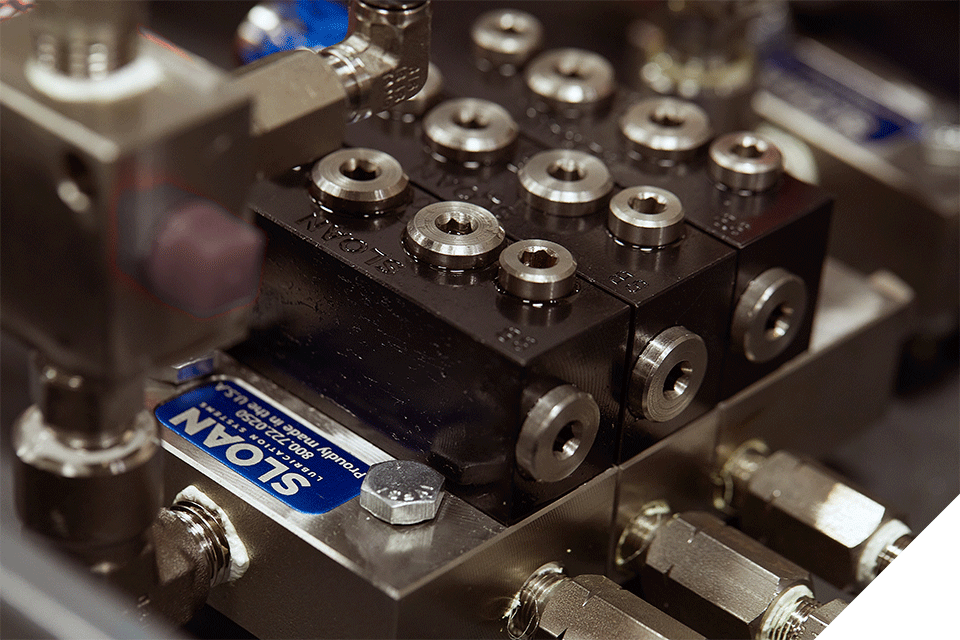
We have seen some recommendations circulating that suggest that, rather than testing divider block assemblies regularly, it is sufficient to replace all the individual divider blocks, often called piston sections, each year. Each divider block assembly is made up of individual divider blocks on a baseplate. The divider blocks have a precision fit piston that enables their function and are the primary wear part on the assembly.
The recommendation to just replace them makes sense from the perspective that divider blocks are relatively cheap, they protect very expensive equipment, and it takes time to accurately test them to ensure each is functioning properly to provide maximum protection. The idea is that instead of spending hours testing divider block assemblies each year, you would be better off spending a few hundred dollars replacing divider blocks each year instead. The problem is that this approach violates the first rule – divider block assemblies need to be tested after assembly. If you simply replace all the divider blocks and do not test, you have just put an untested assembly into service, and that can lead to expensive problems.
At Sloan Lubrication Systems we test divider blocks of all ages and origins, and regularly find bad blocks in operation. Sometimes these blocks have already caused damage to equipment, other times we catch them before things go wrong. We have even tested brand new blocks pulled straight from a customer’s inventory that could have caused critical failures, some due to manufacturing defects, others due to improper storage. The only way we found them was by testing them as an assembly before they were put into operation, saving customers downtime and unnecessary expenses.
The bottom line is this: if you are replacing your blocks each year without testing them as complete assemblies, you are taking an uncalculated risk. Even new piston sections need to be tested after they are put on to an existing assembly to ensure fail-safe operation. Which begs the question, if testing is required anyway, what is the true benefit of replacing the piston sections every year? One thing is for certain, recommending annual replacement to our customers would be a great way to sell more divider blocks and make a buck, but it is not the best way to ensure success, which is what Sloan Lubrication Systems has been all about for more than 100 years.
The Dual Purpose of Divider Blocks:
It is important to understand that divider blocks serve a dual purpose in lubrication systems. First, they divide up the total lubricant flow and precisely deliver the proper amount of lubricant to each delivery point. That part is obvious. Their second purpose is what some equipment operators misunderstand - divider blocks are also the key to enabling the lubrication system to trigger a fail-safe shutdown. What this means is that if any downstream delivery point, secondary block, or check valve fails, it is the integrity of the divider blocks that enable a fail-safe shutdown.
For high pressure divider blocks to serve this function, they need to have an extremely accurate piston fit that provides a perfect seal, preventing lubricant from bypassing or leaking internally. In other words, they can deadhead against pressure if a line is blocked. If lubricant can bypass the divider block, it will not deadhead against the back pressure and will continue to cycle and send signals to the control system that everything is fine. Divider blocks have a lifespan that varies depending on application. For most, this is five or more years, but to be certain, pressure testing is required to verify the block’s ability to deadhead against pressure.
Over the years, some manufacturers and resellers have recommended different testing criteria, but in the decades that divider blocks have been in use, the industry has coalesced around specific tests with slight variations, that have been proven to protect lubricated equipment from lubrication failure with a high degree of certainty. Many divider block lubrication system operators are not following these best practices.
Divider Block Testing Best Practices
Test 1: The cycle pressure test.
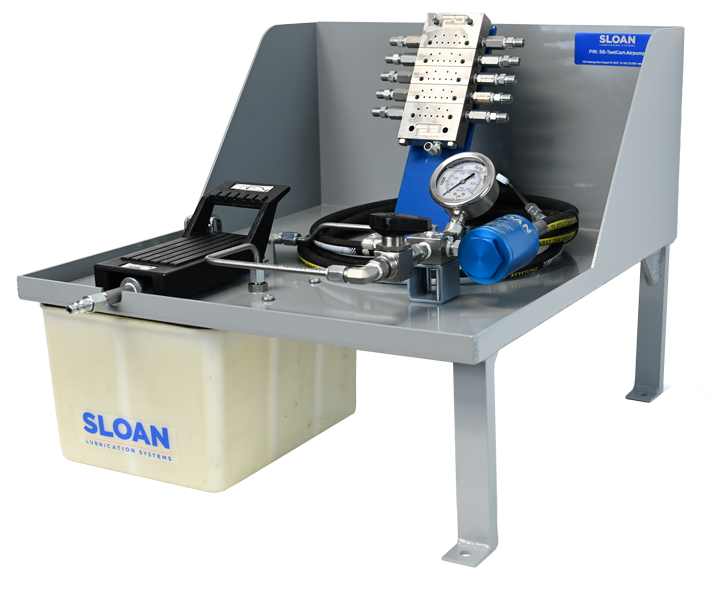
Disconnect the divider block outlet tubing. Attach a purge pump to the inlet and slowly cycle CLEAN lubricant through the divider block assembly. Actuate the pump several times until you see all the bubbles purge through the outlets and clean drops of lubricant start to cycle through. Watch the gauge and you should see a spike that corresponds to each outlet delivering a shot of lubricant. What you are seeing is the pressure it takes to make the pistons within that section cycle. It needs to be under 500 PSI. It is important to pump lubricant SLOWLY. There should be several seconds between each piston cycle. Pumping too quickly may make a good block fail this test.
Test 2: The bleed-down test.
After properly performing test 1, you have a well purged divider block assembly that is ready for the bleed-down test. Use a test cap to block each outlet sequentially, slowly pressuring each up to 3000 PSI. Set a timer for 1 minute. If the block immediately bypasses and loses pressure, or bleeds down more than 500 PSI over 1 minute, it did not pass the test and should be replaced.
If you have any questions about divider blocks, divider block testing, or just want some help making sure your PM program works, please do not hesitate to reach out to our teams.
We are here to help.
Did You Know:
At Sloan Lubrication Systems we have a wide range of test and purge pumps to make regular preventative maintenance easy. Check out our test and purge pumps page to find out more.